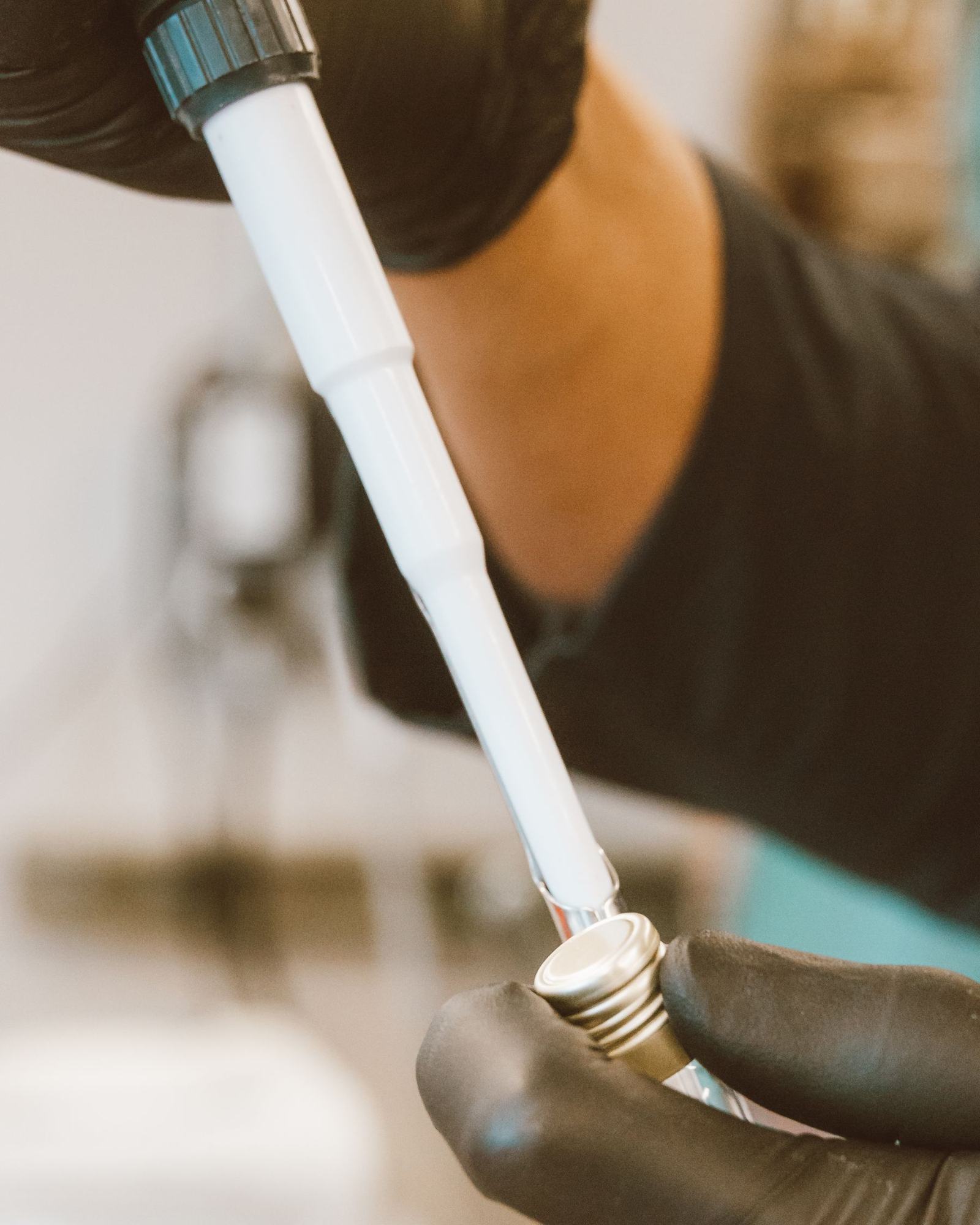
- Non-liposomal = the free active; liposomal = the same active wrapped in phospholipid vesicles.
- Liposomes are designed to protect, disperse and improve tolerance of an active.
- Benefit depends on the active, formulation and dose — ask for data.
- Liposomes, phytosomes, nano-emulsions and micelles are different carriers.
The short answer
A non-liposomal (conventional) ingredient delivers the active as a raw powder, solution or simple dispersion. A liposomal ingredient wraps the same active inside phospholipid vesicles first. The carrier is designed to protect the active, help it disperse, and improve how well it is tolerated and taken up — but it is a design goal to be confirmed with data for each active, not an automatic guarantee.
What happens to a free active on the way in?
Taken by mouth, a free active meets several obstacles: stomach acid and digestive enzymes can degrade it, poor water solubility limits how much dissolves, and limited permeability across the gut wall caps how much crosses. Many popular actives suffer from more than one of these. Curcumin, CoQ10, quercetin and resveratrol are poorly water-soluble; glutathione is fragile; some mineral salts, such as iron, are hard on the stomach.
How a liposomal carrier is designed to help
- Protection. The lipid shell separates the active from oxygen, light and, for oral use, the harshest parts of the digestive tract.
- Solubilisation. Fat-soluble actives sit in the bilayer and disperse in water as nano-sized vesicles instead of clumping.
- Tolerance. Encapsulation can mask taste and reduce direct contact between an irritating active and the gut lining.
- Uptake. Lipid vesicles can engage the body's normal lipid-handling pathways; how much this improves uptake depends on the active and the formulation.
Liposomal vs non-liposomal at a glance
| Conventional (free) format | Liposomal format | |
|---|---|---|
| Solubility | Poorly soluble actives clump, float or settle in water-based products. | ✓Fat-soluble actives ride in the bilayer and disperse as nano-sized vesicles. |
| Stability | Exposed to oxygen, light and, when taken orally, gastric acid and enzymes. | ✓Held inside a lipid shell, away from the bulk medium. |
| Tolerance | Some minerals and vitamins irritate the stomach or taste strongly at practical doses. | ✓Encapsulation masks taste and can reduce direct contact with the gut lining. |
| Formulation | Often needs solvents, surfactants or high excipient loads. | ✓Water-dispersible with a plant-based phospholipid carrier. |
| Evidence to ask for | Standard assay and stability data. | ✓Particle size, PDI, zeta potential, encapsulation efficiency, and stability of the vesicle itself. |
Which actives benefit most?
Liposomal delivery makes the most difference for actives that are poorly water-soluble (CoQ10, curcumin, lycopene, lutein), chemically unstable (vitamin C, glutathione, retinol), or poorly tolerated (iron, magnesium, zinc). It matters less for compounds that are already stable, soluble and well tolerated.
Liposomes vs phytosomes, nano-emulsions and micelles
Several carrier technologies get grouped together. They are not the same:
| Carrier | Structure | Typically carries | Note |
|---|---|---|---|
| Liposome | Phospholipid bilayer vesicle with aqueous core | Water- and fat-soluble actives | Well-characterised; size and lamellarity controlled |
| Phytosome®-type complex | Active bound to phospholipid molecules (not a vesicle) | Mostly polyphenols and plant extracts | Molecular complex rather than a hollow carrier |
| Nano-emulsion | Oil droplets stabilised by surfactant | Fat-soluble actives | Needs oil phase and surfactant |
| Micelle | Single-layer surfactant ball | Fat-soluble actives | No aqueous core; small carrying capacity |
An honest caution
“Liposomal” is a description of a carrier, not a quality guarantee. Two liposomal products can differ widely in particle size, uniformity, encapsulation efficiency and stability. When you evaluate one, ask for data and the method used to measure it — our sourcing checklist lists what to request.